Tactical K9 Vest Review: Best No-Pull Military-Grade Harnesses for Large Breeds
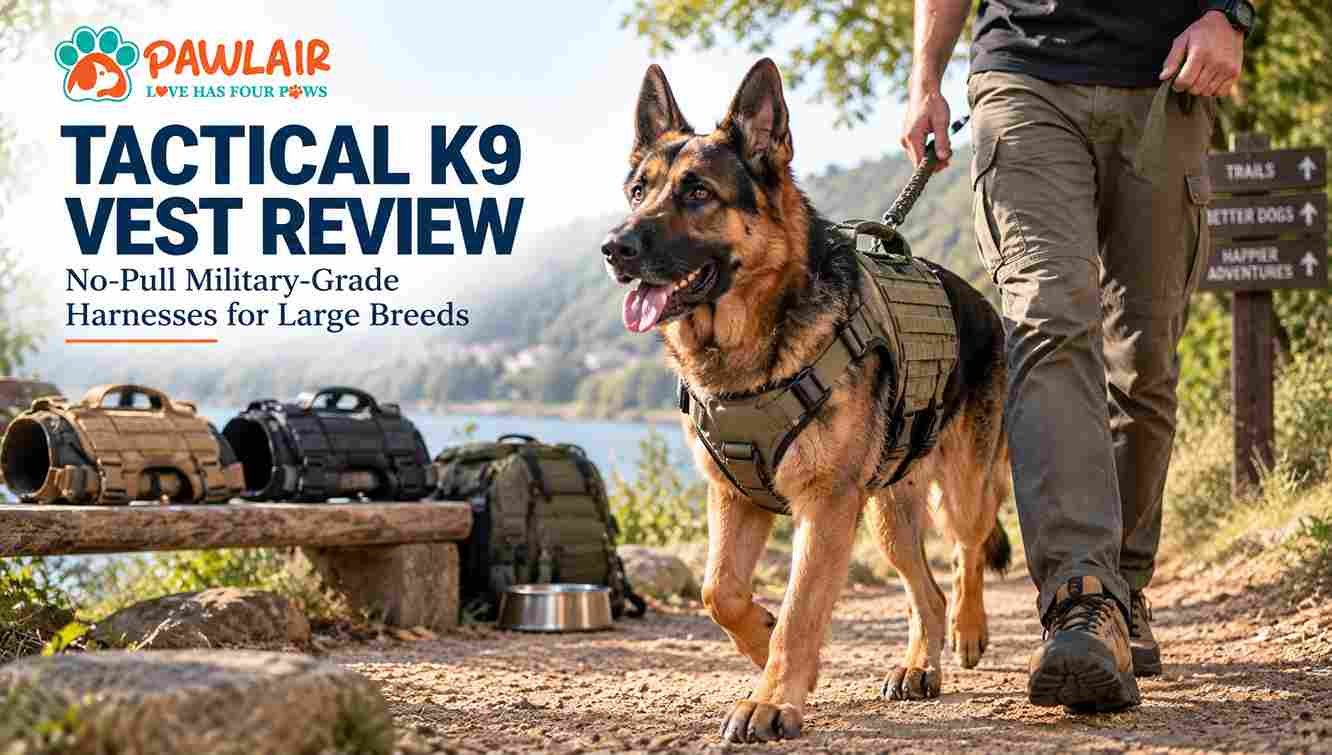
Large dogs can be powerful, energetic, and difficult to control with an ordinary collar or poorly fitted harness. A tactical-style harness can provide a more structured fit, multiple attachment points, and better control during walks and training. Choosing the Best tactical dog harness requires looking beyond its appearance and checking comfort, adjustability, durability, and safe handling.
What Is a Tactical K9 Vest?
A tactical K9 vest is a structured dog harness inspired by working-dog equipment. These harnesses commonly feature reinforced webbing, adjustable straps, sturdy buckles, handles, and front or rear leash attachment points. Despite the military-style appearance, the most important consideration for everyday pet use is whether the design safely fits the individual dog.
A military-grade K9 vest should not be selected simply because it looks strong. Terms such as “military-grade” can describe construction or marketing positioning rather than a universal safety certification. Examine the materials, stitching, hardware, weight capacity, adjustment range, and manufacturer’s intended use before purchasing.
Why Choose a Tactical Harness for Large Breeds?
Large breeds can generate significant pulling force, particularly when they see another dog, wildlife, traffic, or something exciting. A well-designed harness distributes leash pressure across the dog’s body rather than relying entirely on the neck.
A tactical harness can also provide better handling than a simple collar when walking, traveling, or practicing obedience exercises. However, no harness can completely prevent pulling by itself. Combining appropriate equipment with consistent pet training is essential for developing reliable walking behavior.
Look for a No-Pull Front Attachment
One of the most useful features in a no-pull harness is a front leash attachment. When the dog moves forward with excessive force, the front connection can redirect the dog’s body instead of allowing the dog to put its full strength directly into forward motion.
The front attachment should be positioned appropriately and used according to the manufacturer’s instructions. A no-pull design should support training rather than encourage harsh corrections. Reward-based techniques can teach your dog that walking calmly beside you leads to positive outcomes.
Military-Grade Materials and Construction
A military-grade K9 vest may use materials such as reinforced nylon webbing, heavy-duty stitching, durable fabric panels, and strong buckles. These features can be valuable for active dogs, outdoor walks, and structured training sessions.
Durability should still be balanced with comfort. A very heavy harness may be unnecessarily restrictive for some dogs, particularly during long walks or hot weather. Look for breathable sections, smooth edges, and materials that do not rub against the dog’s armpits or chest.
Use the Handle Responsibly
A top or back handle can be useful when a pet parent needs brief physical control, such as helping a dog into a vehicle or guiding it away from an obstacle. This can be particularly convenient for large dogs that are difficult to move with a leash alone.
However, avoid lifting a heavy dog by the handle unless the manufacturer specifically states that the harness is designed for lifting and your dog’s size is within its stated capacity. For ordinary handling, use the handle as a short-term control feature rather than a replacement for appropriate leash management.
Tactical Harnesses and Daily Walking
A tactical harness can work well for daily walks when it is lightweight enough, correctly fitted, and comfortable for the dog. Large breeds often need regular exercise, and a suitable harness can make walking more manageable for both the dog and owner.
Start each walk by checking the harness, leash connection, and adjustment points. During the first few uses, observe your dog’s gait and body language. If you notice rubbing, restricted movement, persistent discomfort, or attempts to escape the harness, stop and reassess the fit.
Introduce the Harness Gradually
Some dogs immediately accept a new harness, while others may resist wearing unfamiliar equipment. Introduce the harness at home before taking your dog outside. Allow your dog to sniff it, reward calm interaction, and put it on for short periods.
Gradually increase wearing time while rewarding relaxed behavior. This approach turns the harness into a familiar part of the dog’s routine rather than something associated only with restraint. Positive pet training can make the transition easier, especially for puppies or sensitive dogs.
Combine the Harness With Leash Training
A Best tactical dog harness should be viewed as a training aid rather than a solution to pulling. Begin in a quiet environment where distractions are limited. Reward your dog for walking near you with a loose leash and calmly change direction when pulling begins.
Keep training sessions short and consistent. Avoid repeatedly jerking the leash or using excessive force. If your dog has severe leash-reactivity or aggressive behavior, consider working with a qualified professional trainer who uses humane, evidence-based methods.
Keep the Harness Clean
Regular cleaning is part of responsible pet care. Dirt, sweat, loose hair, and moisture can accumulate beneath harness straps, particularly around the chest and armpits.
Follow the manufacturer’s cleaning instructions and allow the harness to dry completely before using it again. While cleaning, inspect the stitching, buckles, webbing, and attachment rings for damage. Replacing worn equipment is safer than continuing to use a compromised harness.
Tactical Harnesses and Pet Grooming
Regular pet grooming can also improve harness comfort. Keeping the coat clean and checking areas underneath the harness can help you identify irritation, tangled hair, or skin problems early.
Before a long walk, check your dog’s chest, shoulders, and armpits where straps make contact. If you discover redness, swelling, hair loss, or persistent irritation, discontinue use until the issue has been assessed appropriately.
How Pawlair Fits Into Responsible Dog Training
Pawlair promotes a broader approach to responsible dog ownership where suitable equipment works alongside daily exercise, training, grooming, and general care. A tactical harness can support controlled walking, but the long-term goal should be developing reliable behavior rather than depending entirely on equipment.
Create a simple routine that combines structured walks, positive pet training, appropriate play, regular pet grooming, and consistent pet care. For large breeds, this approach can help build better walking habits while keeping the dog comfortable and engaged.
Tactical K9 Vest Buying Checklist
Before buying, measure your dog carefully and compare the measurements with the manufacturer’s size chart. Check the adjustment range, front and rear attachment points, buckle quality, stitching, handle design, padding, breathability, and overall weight.
After purchasing, test the harness indoors before using it on a busy street. Walk your dog for a few minutes and check for slipping, rubbing, restricted movement, or discomfort. Recheck the fit regularly because weight changes, coat growth, and normal wear can affect how the harness sits.
5 FAQs About Tactical K9 Vests and No-Pull Harnesses
1. What is the best tactical dog harness for a large breed?
The Best tactical dog harness depends on your dog’s measurements, body shape, activity level, walking behavior, and intended use. Prioritize a secure fit, durable construction, comfortable materials, suitable attachment points, and easy adjustment rather than choosing solely by appearance.
2. Is a military-grade K9 vest suitable for everyday walks?
A military-grade K9 vest can be suitable for everyday walking if it is appropriately sized, comfortable, and designed for that type of use. Some tactical harnesses are heavier than ordinary walking harnesses, so consider your dog’s comfort and the local climate.
3. Does a no-pull harness stop a dog from pulling?
A no-pull harness can provide additional control and may redirect forward pulling, but it does not teach leash manners automatically. Consistent reward-based pet training is important for teaching a dog to walk calmly on a loose leash.
4. Can I lift my dog using the tactical harness handle?
Only if the manufacturer specifically states that the handle is designed and rated for lifting your dog’s size and weight. Otherwise, treat the handle as a short-term control feature rather than a lifting mechanism.
5. How often should I check a tactical dog harness?
Inspect the harness before every walk for damaged stitching, worn webbing, loose buckles, cracked hardware, or compromised attachment points. Regular inspection should be part of your pet care routine, especially when the harness is used by a strong or highly active dog.