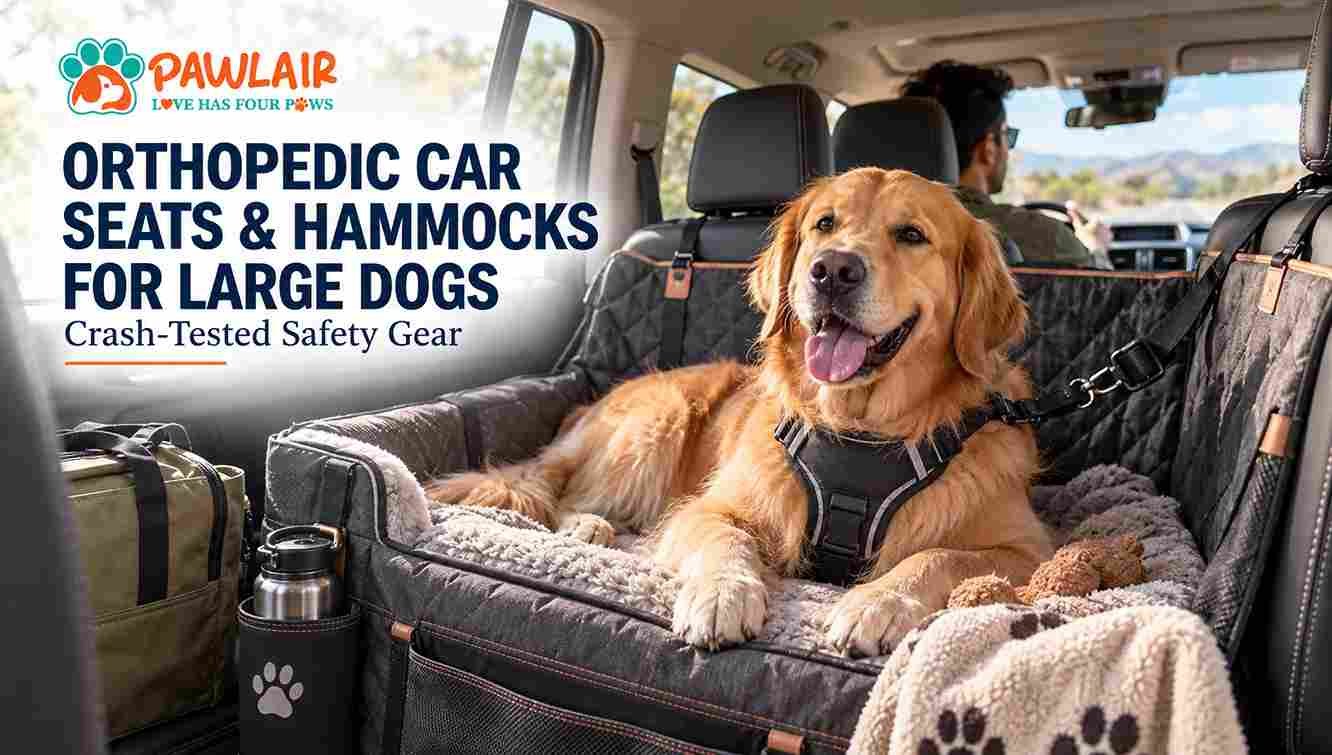
Road trips can be enjoyable for dogs and their families, but large dogs need appropriate support and restraint inside a moving vehicle. An orthopedic car seat or heavy-duty dog car hammock can provide cushioning and help organize the back seat, while a properly tested restraint system is essential for reducing movement during sudden braking or a collision.
Why Large Dogs Need Specialized Car Travel Gear
Large and senior dogs may need additional support because climbing into a vehicle, maintaining balance during turns, or staying upright for long periods can put extra stress on joints. A supportive travel setup can provide a more stable resting surface while helping your dog remain comfortable.
When choosing a crash-tested dog car seat, consider more than padding. Look for secure attachment points, appropriate dimensions, durable materials, and compatibility with a suitable canine restraint. A comfortable bed alone should not be treated as a crash-protection system.
Heavy-Duty Dog Car Hammocks
A heavy-duty dog car hammock can cover the rear seat and footwell, helping create a contained area for a large dog. Many hammock designs attach to the vehicle’s headrests and can protect upholstery from fur, dirt, and accidental spills.
A hammock is primarily a containment and comfort accessory unless it has a verified crash-protection system. Do not assume that a hammock alone will keep a large dog secure during a collision. Pair the travel setup with a properly fitted canine seat belt or other appropriate restraint designed for vehicle travel.
Check the Weight and Size Capacity
Large dogs require equipment designed for their actual size. Before buying a travel seat or hammock, measure your dog’s length, height, and width and compare those measurements with the manufacturer’s specifications.
Do not select a product solely because its title says “large dog.” Check maximum weight, usable seating area, attachment dimensions, and restraint compatibility. A product that is too small can restrict movement, while an unsuitable attachment system may fail to provide the intended stability.
Look for Strong Attachment Points
Vehicle travel gear should remain securely positioned while the vehicle is moving. Inspect straps, buckles, anchors, stitching, clips, and other connection points before every journey.
For a heavy-duty dog car hammock, install each strap according to the manufacturer’s instructions and make sure the headrests are properly positioned. Avoid modifying straps or hardware because an improvised attachment can change how the product behaves during sudden braking.
Use a Proper Canine Restraint
A padded car seat or hammock does not necessarily restrain a dog. Large dogs can move considerable distances during sudden braking, increasing the possibility of injury to the dog and passengers.
Use a canine restraint that is specifically designed for vehicle travel and compatible with your dog’s size and the vehicle setup. Follow the manufacturer’s fitting instructions carefully, and avoid attaching a restraint to a collar if the product is designed to connect to a harness.
How to Introduce Your Dog to the Car Seat
Do not wait until the morning of a road trip to introduce new travel equipment. Place the car seat or hammock at home and allow your dog to investigate it without pressure.
Reward calm behavior with praise or appropriate treats. Gradually practice sitting or lying on the equipment before introducing short vehicle journeys. This approach combines comfortable travel preparation with positive pet training and can help your dog become more familiar with the new environment.
Keep Your Dog Comfortable During Long Drives
Plan regular breaks during longer journeys so your dog can safely stretch, walk, drink water, and relieve itself. Never allow a dog to roam freely inside the vehicle while it is moving, even if the dog appears calm.
Maintain a comfortable vehicle temperature and avoid leaving your dog unattended inside a parked vehicle. Bring familiar bedding if appropriate, along with water, waste bags, required medication, identification information, and any other travel essentials.
Keep the Car Seat Clean
Large dogs can bring fur, dirt, moisture, and debris into the vehicle. A removable and washable cover can make regular pet care easier and help maintain a cleaner travel environment.
Clean the travel equipment according to the manufacturer’s instructions. Check the straps and attachment hardware after washing, particularly if removable components are frequently taken apart and reinstalled. Never use damaged equipment simply because the fabric still appears clean.
How Pawlair Fits Into Safer Dog Travel
Pawlair can be part of a broader routine focused on responsible pet care, pet training, and pet grooming. Before a road trip, pet parents can combine regular grooming, exercise, training, and travel preparation to help their dogs become comfortable with vehicle routines.
A practical preparation checklist should include measuring your dog, selecting appropriately sized travel equipment, checking restraint compatibility, inspecting attachment points, practicing short drives, packing water and essentials, and planning safe rest stops. Taking these steps early can make travel more organized.
Mistakes to Avoid With Large-Dog Car Gear
Avoid buying a product solely because it looks heavily padded or uses the phrase “crash tested” in its advertising. Investigate the manufacturer’s testing information and check whether the testing applies to your dog’s size and the intended restraint configuration.
Never allow your dog to ride unsecured in the front passenger seat, sit on the driver’s lap, or move freely around a moving vehicle. Avoid attaching restraints to unsuitable collars or using damaged straps. Safety equipment works best when correctly installed and consistently used.
5 FAQs About Orthopedic Dog Car Seats and Hammocks
1. Is a crash-tested dog car seat enough to keep a large dog safe?
Not necessarily. A crash-tested dog car seat may provide a tested travel system, but pet parents should understand exactly what was tested and follow the manufacturer’s instructions. A suitable canine restraint and correct installation remain important parts of vehicle safety.
2. Is a heavy-duty dog car hammock safe for large dogs?
A heavy-duty dog car hammock can provide containment, cushioning, and seat protection, but a hammock alone should not automatically be considered crash protection. Pair it with an appropriate vehicle restraint and verify compatibility with your specific vehicle and dog.
3. Are orthopedic car seats suitable for senior dogs?
They can provide a more supportive resting surface for some senior dogs, especially during longer journeys. However, dogs with significant mobility or joint problems may need individualized travel recommendations from a veterinarian.
4. How do I prepare my dog for a car seat?
Introduce the equipment gradually at home, reward calm behavior, practice wearing the appropriate restraint, and begin with short car journeys. Positive pet training can help your dog associate the travel setup with calm and rewarding experiences.
5. What should I check before every road trip?
Inspect straps, buckles, stitching, attachment points, restraint connections, and the condition of the seat or hammock. Confirm that your dog is comfortably fitted, bring water and essential supplies, and plan safe breaks for longer journeys.