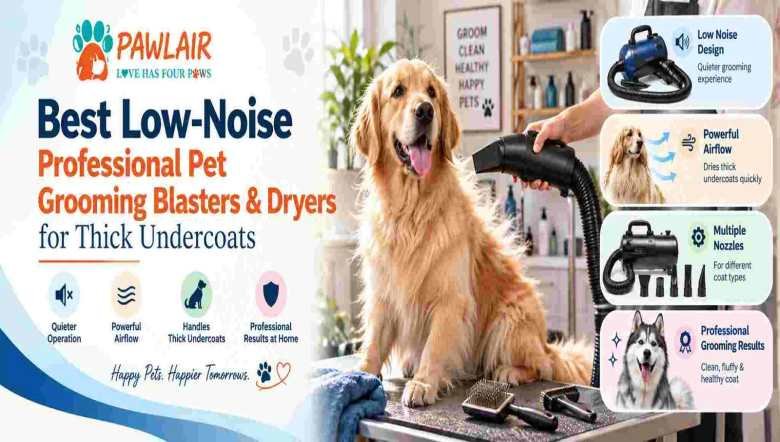
Best Low-Noise Professional Pet Grooming Blasters & Dryers for Thick Undercoats
Drying a dog with a thick double coat can be challenging because moisture often remains trapped close to the skin, even when the outer fur feels dry. A good High velocity dog dryer helps remove water efficiently while reducing prolonged towel rubbing and uncomfortable drying sessions, making professional-style pet grooming easier at home.
Why Low-Noise Dog Dryers Matter
Many dogs become nervous when they hear the sudden, loud sound of a powerful dryer. A low-noise grooming dryer can make the experience calmer, particularly for puppies, senior dogs, and pets that are unfamiliar with grooming equipment. Lower noise does not necessarily mean weak airflow when the dryer is properly designed. For families, young professionals, and busy pet parents, a quieter dryer can also make home grooming more convenient. Choosing a model with adjustable airflow and temperature allows you to gradually introduce your dog to the sound and sensation while keeping the session controlled.
What Is a High-Velocity Dog Dryer?
A High velocity dog dryer uses powerful airflow to push water away from the coat rather than relying mainly on heated air to evaporate moisture. This is especially useful for double-coated breeds because concentrated airflow can reach deeper layers of dense fur and help separate wet undercoat.
Unlike a conventional human hair dryer, a professional dog dryer is designed around pet-grooming needs. Many models offer variable airflow, temperature controls, flexible hoses, and different nozzles that allow the airflow to be adjusted according to coat type and grooming requirements.
Choose Airflow Over Excessive Heat
When drying a dog, strong airflow is generally more useful than simply increasing the temperature. Excessive heat can make the grooming experience uncomfortable and may irritate sensitive skin. A dryer with adjustable airflow and moderate temperature settings gives pet parents better control during the session.
Start with a lower setting and observe your dog’s reaction before increasing airflow. Keep the nozzle moving rather than holding concentrated air against one area for too long, and avoid directing warm air directly toward the eyes, ears, nose, or other sensitive areas.
Features to Look for in a Professional Dog Dryer
When comparing professional pet grooming blasters, focus on practical features rather than marketing claims. Variable speed control, adjustable temperature, a flexible hose, multiple nozzles, stable construction, and a reasonably quiet motor can make everyday grooming easier. A dryer with a removable filter is also useful because pet hair and dust can accumulate during repeated grooming sessions. Easy maintenance helps maintain consistent airflow and reduces the chance of the machine becoming less effective over time.
Best Dryer Type for Thick Undercoats
Dogs with dense undercoats need a dryer capable of moving substantial volumes of air through the coat. A forced-air or high-velocity dryer can be particularly useful for breeds with thick double coats because it helps separate layers of fur and push moisture outward.
A home pet grooming blow dryer can be a practical option when professional grooming appointments are not always convenient. However, pet parents should select equipment based on their dog’s coat density, body size, sensitivity to noise, and grooming experience rather than choosing the most powerful model available.
How to Introduce a Dog to a Noisy Dryer
Never start a grooming session by switching a powerful dryer on directly beside your dog. First allow your pet to investigate the equipment while it is switched off. Reward calm behavior with a small treat, gentle praise, or another familiar positive reinforcement.
Once your dog is comfortable around the equipment, turn it on at the lowest practical setting from a distance. Gradually bring the airflow closer while rewarding relaxed behavior. This approach can become an important part of pet training, particularly for dogs that are easily startled by unfamiliar sounds.
Choosing the Right Grooming Kit for Your Dog
Regular grooming is an important part of responsible dog care. It helps keep your pet’s coat clean, reduces tangles and loose hair, and allows you to notice changes such as dry skin, unusual lumps, redness, or parasites at an early stage. For pet parents who prefer to handle basic grooming at home, choosing the best dog grooming kit can make the process easier, more comfortable, and more consistent. A suitable kit should include essential tools based on your dog’s coat type, size, and grooming requirements.
Combine Drying With Regular Grooming
Drying is only one part of responsible pet care. Dogs with thick undercoats also benefit from regular brushing to remove loose hair, identify tangles, and keep the coat manageable. The correct brush depends on whether the dog has a short, long, curly, or double coat. During grooming, check the skin for unusual redness, irritation, sores, parasites, or areas of discomfort. If you notice something unusual or your dog reacts painfully when an area is touched, pause the grooming session and consult a veterinarian or qualified professional rather than attempting to treat the issue yourself.
Grooming Can Support Training
Regular grooming sessions can become useful opportunities for pet training because dogs learn to remain calm while being handled. Practice touching paws, ears, legs, tail, and coat during short sessions before introducing more complicated grooming equipment.
Reward cooperative behavior instead of forcing your dog through the entire process. Over time, calm exposure to brushes, towels, dryers, and bathing equipment can help create more predictable grooming routines and make future professional appointments easier.
How Pawlair Can Fit Into Your Grooming Routine
For pet parents who want to maintain their dog’s coat between professional appointments, Pawlair can be part of a broader approach to pet care, pet training, and pet grooming. A consistent routine can include brushing, bathing when appropriate, coat inspection, nail care, training practice, and safe drying.
Home equipment can be useful, but it should not replace professional assistance when a dog has severe matting, difficult coat problems, skin abnormalities, or becomes extremely distressed during grooming. Knowing when to handle best dog grooming kit at home and when to seek professional help is an important part of responsible pet ownership.
Frequently Asked Questions
1. Is a high-velocity dryer good for dogs with thick undercoats?
Yes, a High velocity dog dryer can be useful for thick double coats because powerful airflow helps move water through dense layers of fur. Use adjustable airflow and avoid excessive heat, particularly when your dog has sensitive skin.
2. Can I use a home pet grooming blow dryer?
A home pet grooming blow dryer can be suitable when it is designed for safe pet use and provides appropriate airflow and temperature control. Avoid using excessive heat and never leave your dog unattended while drying.
3. Are low-noise dog dryers better for nervous dogs?
Low-noise dryers may make grooming more manageable for noise-sensitive dogs, but individual reactions vary. Gradual introduction, distance, low settings, treats, and positive pet training can help your dog become more comfortable.
4. How do I dry a dog with a very thick double coat?
Remove excess water with a towel, then use controlled airflow to work through the coat section by section. Keep the nozzle moving, check the undercoat regularly, and make sure areas such as the chest, belly, neck, and behind the legs are completely dry.
5. Does a professional dog dryer replace regular brushing?
No. Drying removes moisture, while brushing helps manage loose hair, tangles, and undercoat buildup. Combining appropriate brushing, bathing, drying, and routine pet grooming creates a more complete coat-care routine.