Best Airline-Approved Dog Crates for International Flights Heavy-Duty & Secure
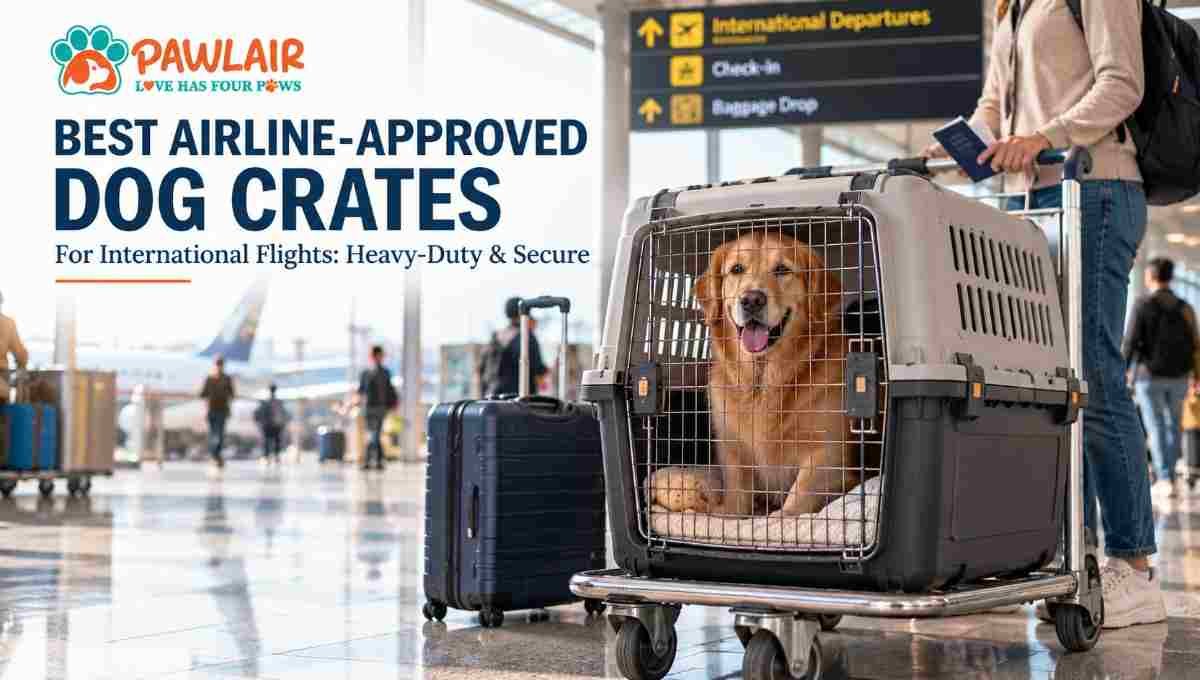
International travel with a dog requires more than booking a pet-friendly flight. Choosing the right crate is one of the most important steps for your dog’s safety, comfort, and smooth handling throughout the journey. The Best international travel dog crate should be strong, escape-resistant, well-ventilated, correctly sized, and suitable for your airline and destination.
What Makes a Dog Crate Suitable for International Air Travel?
When searching for an IATA-approved dog kennel, remember that IATA does not certify or endorse individual pet-crate brands. Instead, the IATA Live Animals Regulations provide container requirements that airlines and handlers use when assessing animal transport containers. Individual airlines can also impose additional or stricter requirements.
A suitable international dog crate should provide enough room for your dog to stand naturally, sit upright, turn around normally, and lie down comfortably. The crate should also be secure enough to prevent accidental opening and constructed without sharp edges or dangerous internal features.
1. Heavy-Duty Rigid Plastic Dog Crates
Heavy-duty rigid plastic crates are among the most practical choices for international air travel because they combine durability, ventilation, and relatively manageable weight. Look for a sturdy construction, reinforced corners, secure locking points, and ventilation openings positioned appropriately around the crate.
A rigid crate can be particularly useful for medium and large dogs that need more protection during handling. However, simply purchasing a “heavy-duty” crate does not automatically make it airline-compliant. Always compare the crate’s specifications with your airline’s current requirements before traveling.
2. Reinforced Metal or Composite Travel Crates
For dogs that are powerful, anxious, or prone to attempting to escape, a reinforced crate may provide additional security. IATA container guidance allows materials including rigid plastics, fiberglass, metal, and certain compliant wood constructions, depending on the applicable container requirements.
The important point is that strength should not come at the expense of ventilation, comfort, or safe handling. Avoid makeshift cages or containers with exposed wire that could injure your dog. IATA specifically notes that containers made entirely from welded wire mesh are not suitable for air transport.
3. Choose the Correct Crate Size
Choosing the correct size is more important than simply buying the largest crate available. Your dog needs sufficient internal space to stand, sit erect, turn around normally, and lie down naturally during the journey. Oversized or incorrectly proportioned crates can also create airline-handling issues.
Before purchasing your Best international travel dog crate, measure your dog carefully. IATA guidance uses measurements such as body length, elbow height, shoulder width, and standing height to help you determine the right internal dimensions. Bedding height should also be considered when calculating the required internal height.
4. Prioritize Ventilation and Airflow
Ventilation is one of the most important features of an international dog crate. Your dog should have sufficient airflow without the crate exposing them to unnecessary drafts, injury risks, or escape opportunities. IATA guidance emphasizes appropriate ventilation and indicates that many animal containers require ventilation across multiple sides.
Before the flight, inspect every ventilation opening and make sure nothing blocks the airflow. Bedding, blankets, toys, or accessories should never cover important ventilation areas. This simple check is an essential part of responsible pet care before air travel.
5. Use Secure Doors and Locking Mechanisms
A reliable door is essential when selecting an IATA-approved dog kennel. The door should close securely and remain firmly locked during handling, loading, transportation, and unloading. Check the locking mechanism several times before leaving home.
Avoid making unauthorized modifications to the crate that could weaken the door or interfere with airline inspection. If additional security is required, confirm acceptable methods with the airline instead of improvising with ropes, wires, or materials that could create a hazard.
6. Add Food and Water Containers Correctly
For longer journeys, appropriate food and water arrangements are important. IATA container guidance includes provisions for food and water containers that can be accessed as required, while specific feeding procedures can depend on the journey and airline handling arrangements.
Use sturdy containers that attach securely to the crate and cannot easily spill or become detached. Avoid filling the crate with excessive food, treats, or loose accessories. Ask your airline about its specific feeding and watering instructions before travel.
7. Prepare Your Dog Before the Flight
Buying the right crate is only one part of successful international pet travel. Your dog should become familiar with the crate well before departure. Start by placing the crate in a comfortable area at home and allowing your dog to investigate it voluntarily.
Gradually encourage your dog to enter the crate using treats, praise, toys, and calm interactions. This makes crate training a positive experience instead of something associated only with airports and long journeys. Good pet training can make the travel experience considerably easier for both the dog and the owner.
8. Check Airline and Destination Requirements
Never rely only on a product description saying “airline approved.” Airlines may have different rules concerning crate dimensions, materials, breed restrictions, total pet-and-container weight, cabin travel, cargo travel, and documentation. IATA also advises travelers to check the specific airline and country requirements for their journey.
Create a travel checklist several weeks before departure. Confirm the airline’s pet policy, destination-country regulations, health documentation, identification requirements, crate specifications, reservation procedures, and any transit-country requirements. International pet travel can involve significantly more paperwork than a domestic journey.
9. Combine Travel Preparation With Grooming and Training
A comfortable dog is easier to manage during travel preparation. Schedule pet grooming early enough that your dog is clean and comfortable without introducing unfamiliar grooming immediately before departure.
Regular brushing, nail care, coat maintenance, and hygiene can help your dog feel more comfortable during a long journey. Similarly, reinforce calm behaviors through pet training, especially entering the crate, waiting quietly, responding to basic commands, and remaining comfortable around unfamiliar people.
10. Consider Pawlair for Overall Travel Preparation
Preparing for international travel is not only about buying a crate. Your dog may also need support with grooming, handling, walking routines, crate familiarity, and general pet care before the trip. Pawlair can be part of your preparation routine when you need professional pet-care support.
Start preparation early rather than waiting until the week of departure. Give your dog time to become comfortable with the crate, maintain a predictable routine, and gradually adapt to longer periods of confinement. A calm preparation process can make international travel more manageable for both pets and their families.
International Dog Crate Buying Checklist
Before purchasing your crate, check that it is appropriately sized for your dog, structurally strong, well-ventilated, escape-resistant, easy to handle, and compatible with your airline’s current requirements. Verify the internal dimensions rather than relying only on the manufacturer’s breed or weight recommendation.
Also inspect the door, hinges, locking system, ventilation openings, floor surface, and food-and-water attachment points. Keep the crate clean and free from loose objects that could move around during transportation. Take photographs of your crate and documentation before traveling for your own records.